Dana Point Headlands Conservation Trails in Watercolor & Ink
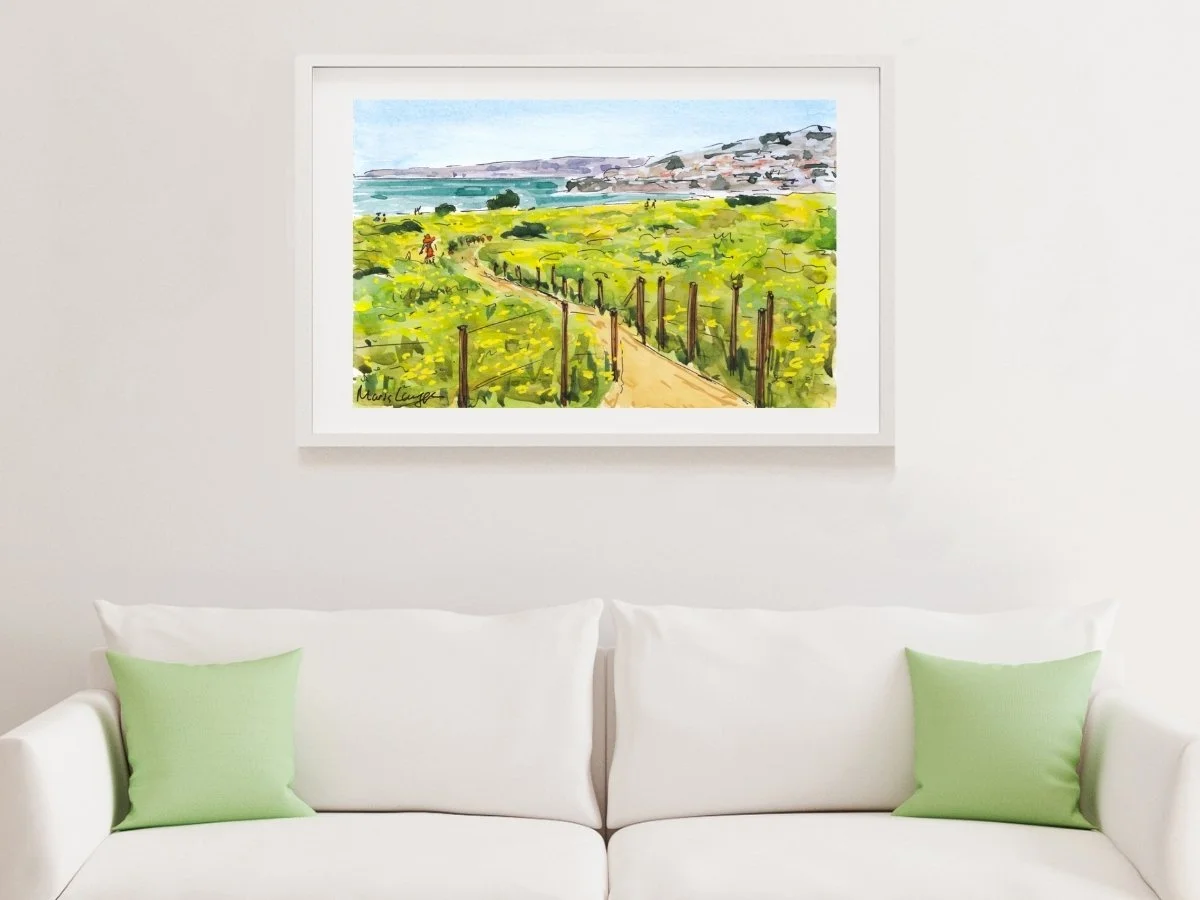
Dana Point Conservation Trail
Golden wildflowers carpeting the bluffs, a winding trail lined with wooden posts, and the shimmering Pacific stretching into the distance — this is the Dana Point Headlands on a sunny day.
This painting captures not just a view, but a place layered with centuries of human history and thousands of years of natural beauty.
Ancient Land & First Stewards
Long before Dana Point had a name, the Headlands were home to the Acjachemen (Juaneño) people, who thrived here for over 9,000 years. This land, with its high vantage points and abundant resources, was a place of both daily living and spiritual connection. The bluffs provided sweeping views for tracking fish migrations, spotting whales offshore, and anticipating the arrival of neighboring tribes.
The Acjachemen used many of the same plants that still grow in the Headlands today — coastal sage for medicine, toyon berries for food, and native grasses for weaving. The trails we walk now echo the footpaths they once traveled, linking the ocean to inland valleys.
Spanish Exploration & Early California
In 1542, Spanish explorer Juan Rodríguez Cabrillo sailed past these cliffs, marking the first recorded European sighting of this coast. But it wasn’t until the late 1700s that the Spanish presence became permanent, with the establishment of the California missions. The Mission San Juan Capistrano, founded in 1776 just inland from here, brought dramatic changes to the native population and the landscape.
The arrival of the Spanish introduced ranching, new crops, and European-style building, and it began the era of land grants that would shape ownership for the next century.
Richard Henry Dana Jr. & the Hide Trade
In the 1830s, a young Harvard student named Richard Henry Dana Jr. joined a merchant ship and sailed around Cape Horn to California. His memoir, Two Years Before the Mast, described his time in the hide trade along this coast. Dana wrote of this cove as “the only romantic spot on the coast,” a phrase that captured the imagination of readers back East.
During this period, workers from nearby ranchos would throw dried cattle hides from the cliffs down to small boats in the water below — a labor-intensive process called “hide droghing.” The hides were then rowed out to larger ships anchored offshore, bound for New England. This unique practice cemented Dana Point’s place in California’s maritime history.
Ole Hanson & the Spanish Village by the Sea
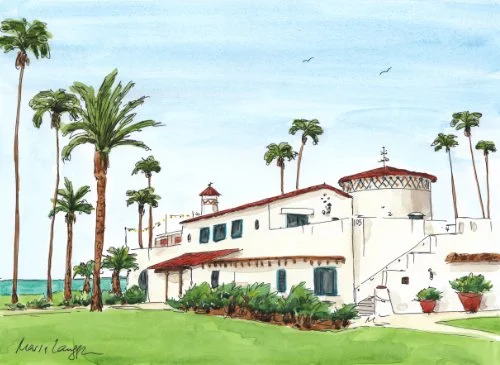
In the 1920s, developer Ole Hanson purchased large portions of the coastline with a vision of creating a “Spanish Village by the Sea.” His plans included a grand hotel, custom homes, and a scenic harbor — all designed with red tile roofs and white stucco walls to evoke the romantic image of old California.
While some of Hanson’s vision came to life in the town itself, the Great Depression halted many of his larger projects. The Headlands, though surveyed and mapped for development, remained untouched. See my post about Ole Hanson here
The Fight for Preservation
By the 1980s and 1990s, the Headlands faced renewed pressure from developers. Proposals called for luxury homes, hotels, and other large-scale projects. Concerned residents, environmentalists, and local officials began a decades-long campaign to protect the bluffs.
Their efforts culminated in 2005 with the creation of the Dana Point Headlands Conservation Area — a 60-acre preserve designed to protect the fragile coastal ecosystem and keep the land open to the public. The trails now wind through rare coastal sage scrub, home to endangered plants like cliff spurge and California boxthorn, and provide nesting grounds for species like the California gnatcatcher, peregrine falcon, and the occasional sighting of migrating whales offshore.
Walking the Trails Today
Today, the Headlands trails are a place where history, nature, and beauty meet. Interpretive signs along the paths share information about the wildlife and the people who shaped this land. On a clear day, you can see Catalina Island to the west, the harbor to the south, and the unbroken line of the Pacific stretching beyond the horizon.
Wildflowers bloom in spring, painting the bluffs in shades of yellow, orange, and purple. In summer, the coastal breeze keeps the air fresh, while autumn brings golden light that makes the cliffs glow. It’s this mix of history, seasonal change, and sheer beauty that makes the Headlands one of my favorite subjects to paint.
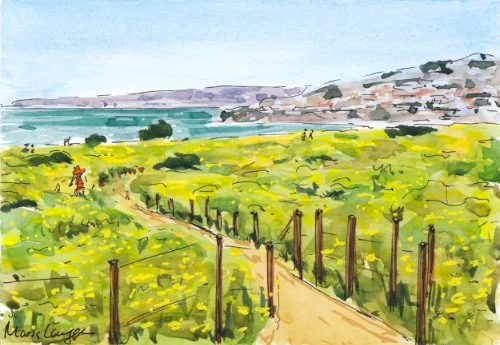
Dana Point Conservation Trail
Capturing the Headlands in Art
This painting began in my art studio, inspired by a photograph I took on a bright, breezy day. I started with clean, simple ink outlines to capture the curve of the trail, the clusters of wildflowers, and the distant rise of the bluffs.
From there, I layered sunny watercolors: warm yellows for the flowers, fresh greens for the open fields, and crisp blues for the ocean and sky. The figures walking the trail bring scale and a sense of life to the scene — a quiet nod to all who have walked here, from the Acjachemen people to today’s hikers.
My goal was not only to depict the landscape, but to convey its energy — the way the sun warms the cliffs, the breeze stirs the wildflowers, and the Pacific seems endless. The bold ink lines give structure, while the watercolor layers bring movement, joy, and light.
Bringing the Headlands Home
Whether you’ve walked this path yourself or are discovering it for the first time through my art, I hope this piece transports you to a sunny day on the Dana Point Headlands — where history whispers from the cliffs and the sea feels like it’s just for you.
If you’d like to enjoy this view every day, prints of this piece are available in my shop — a bright reminder of California’s coastal beauty, ready to bring sunshine into your home.